February 2026
Inside the Newsletter:
Intern Applications | PFAS Assistance | Waste Reduction | Events | Funding Opportunities
Students: Apply now for the MnTAP Intern Program!
 The Minnesota Technical Assistance Program (MnTAP) is seeking junior or senior-level college students studying engineering or other science/technology disciplines to work on waste reduction, water conservation, and energy efficiency projects at host facilities throughout Minnesota this summer. MnTAP plans to support 15 to 17 intern projects during summer 2026 based at locations around the state, covering industries such as food processing, manufacturing, and healthcare.
Job descriptions for our 15 to 17 projects will each be posted as they are approved, but students only need to apply once and can do so right NOW! Visit our MnTAP Intern Program Students page to apply now and learn more.
Contact
Matt Domski – Intern Program Manager
mdomski@umn.edu
612-624-5119
PFAS Assistance for Metal Finishing and More
PFAS Source Identification and Reduction in Metal Finishing
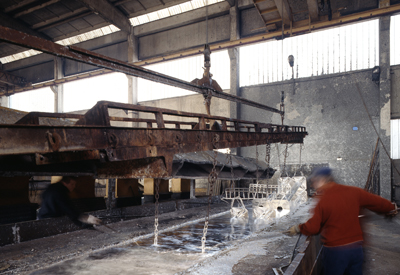 Perfluoroalkyl and polyfluoroalkyl substances (PFAS) are a class of fluorine containing human-synthesized chemicals that have been extensively used in consumer and industrial products since the 1950s. As PFAS do not readily break down, they can accumulate in people and in the environment. The metal finishing industry frequently uses PFAS for a wide array of purposes given PFAS’ diverse and hard-to-replicate performance characteristics.
One of the most notable applications of PFAS applications in metal finishing is fume suppression in chrome plating facilities. Other common uses of PFAS in metal finishing include process aids for metal plating and coating operations or additives to prevent cracking in metal coating operations.
Due to the prominent, and sometimes historically mandated, use of PFAS within the metal finishing industry, MnTAP has launched a project focused on helping metal finishing facilities reduce their PFAS use. This assistance is provided by:
- Working with businesses to identify sources of PFAS in their processes and/or products through interviews and site visits (where applicable).
- Offering businesses insight and tools on how to ask their suppliers whether materials they use contain PFAS.
- Helping businesses to research if there are appropriate and safe replacements for the PFAS used within their processes and/or products.
Please reach out to MnTAP if you have any questions or wish to receive technical assistance with PFAS at your location!
Upcoming July 1, 2026 Deadline for MN manufacturers
As part of the PFAS pollution prevention law called Amara’s Law, manufacturers are required to report intentionally added PFAS in products sold in Minnesota and pay a fee. Initial reports are due July 1, 2026, and subsequent reports are due each year on February 1. Except for trade secrets, all information will be publicly accessible after a review period.
The reporting will include a description of the product, the purposes/functions that PFAS play in the product, the amount of each type of PFAS, and other information. For more information on this process, visit MPCA’s Reporting PFAS in products webpage.
Navigating Your Supply Chain
In many cases, gathering this information will require manufacturers to reach out to suppliers to determine if PFAS are present in the materials purchased as inputs.
As you begin this outreach, it is important to note that PFAS definitions vary globally. Minnesota specifically defines PFAS as a class of fluorinated organic chemicals containing at least one fully fluorinated carbon atom. To ensure you receive the most accurate data from your supply chain, we recommend highlighting this specific definition when sending your data requests.
We Are Here to Help
To streamline your outreach efforts, MnTAP has developed a supplier communication template. If you would like help using this template or have any other questions regarding upcoming PFAS compliance, please let us know.
Contact
Kelsey Klucas – Director
kluc0035@umn.edu
612-624-4619
Waste Reduction and Innovation Grant in Ramsey and Washington Counties
 MnTAP has recently initiated a special county-funded project in partnership with Ramsey/Washington Recycling & Energy (R&E) with a focus on providing no-cost waste reduction site assessments for facilities within Ramsey and Washington counties. R&E is a public entity responsible for meeting Minnesota’s 75% recycling goal and manages nearly 13% of the state’s total waste (R&E 2020 Annual Report). All trash from residents and businesses in Ramsey and Washington counties is delivered to the R&E facility in Newport. The goal is to conduct technical assessments to identify projects that help businesses reduce waste and save money. MnTAP is currently focused on potential projects in the manufacturing or food products and packaging industries, and BIPOC‑owned and/or BIPOC‑serving businesses in the two counties.
Additionally, BizRecycling is hosting the Waste Reduction and Innovation Grant (WRIG) that can provide up to $50,000 in funding to promote projects that reduce waste in the two counties. The target is mixed municipal solid waste. Eligible grantees must work with a technical assistance provider, such as MnTAP, and undergo an initial site visit to quantify the potential savings. MnTAP will also support businesses with the grant application.
Equipment funded in past projects has included:
- Replacing a nitric acid etching system that produced large volumes of solid and hazardous waste.
- Installing equipment to capture and reuse sprayed powder coating.
- Improving recovery systems for spent brewer’s grains so they can be upcycled for food and agricultural use.
- Transitioning mushroom retail packaging to fully compostable trays and eliminating non-recyclable plastic substrate bags from production.
- Adopting reusable containers for roasted coffee beans.
Applications for the grant are scored as they are submitted, which means the grant is on a first-come, first-served basis. However, even if you are not interested in or eligible for this grant, BizRecycling offers other funding opportunities (i.e., pollution prevention, food recovery, recycling, and bins for recycling and organics) that may be a better fit for your project.
MnTAP work is typically confidential, but work under this project will be shared with public sector project partners at the Ramsey/Washington Recycling and Energy Center and with Ramsey and Washington Counties
If you are interested in learning more about the project or would like to schedule a meeting with MnTAP to discuss a project, please contact Ashwin Nambudiripad, or click here to schedule your no-cost waste reduction assessment! MnTAP is always happy to help with exploring grants or coming up with technical solutions!
Contact
Ashwin Nambudiripad – Associaate Engineer
ashwin@umn.edu
612-624-4638
Events
CS Snapshots
MPCA
March 11, 18, & 25, 2026, 9:00 AM – 11:00 AM
Virtual
Cost: $150
These webinars will contain discussions of collection system (CS) topics, which may include current collection system updates. You will receive an email 2-3 days before the event with instructions and a link to join this training via Microsoft Teams. No exam. Contact hours: 6 Wastewater
Learn more and register on this MPCA website.
2026 RAM/SWANA Conference
RAM/SWANA
April 1, 2026 at 8:00 AM to April 4, 2026 at 4:00 PM
Location: Mystic Lake Center, 2400 Mystic Lake Boulevard, Prior Lake, MN 55372
Cost: $450 to $600 depending on membership and timing of registering
The RAM/SWANA Conference & Show is the premier recycling and waste management conference in the Upper Midwest. Please join us at the conference – a great opportunity for professional development, networking and industry education! Session topics include recycling, solid waste, organics, hazardous waste, and waste prevention or reduction. Learn more and register on this website.
Turf Grass Maintenance Certification Training
MPCA
April 2, 2026, 8:00 AM – 2:00 PM
Virtual, No Cost
The summer turf grass maintenance training focuses on best management practices (BMPs) for lawns and turf. You will learn how turf management affects local lakes and rivers, equipment calibration, selection and application of fertilizers, mowing techniques, pesticide application tips, legal issues and additional resources. Who should attend: contractors maintaining private/public grounds, employees maintaining park, cemetery, city or school grounds, property managers writing contracts, distributors of turf care products. Learn more and register on this MPCA website.
Funding Opportunities
- CSFS: Equipment/vehicle replacement grant (MPCA): Deadline is 4:00 PM CT on March 27, 2026. For public, private, and nonprofit owners of fossil fuel on-road and off-road equipment and vehicles that are used within food systems in Minnesota interested in partial funding for new, cleaner versions of these equipment and vehicles. Vehicle charging equipment and installation costs for replacement vehicles are eligible. This grant aims to reduce greenhouse gas emissions, improve air quality, and replace fossil fuel equipment and vehicles with zero-emission technology.
- CSFS: Statewide organics management infrastructure grant: Deadline is 4:00 PM CT on April 15, 2026. The MPCA has approximately $10 million available to support organics management infrastructure projects across the state that will expand infrastructure capacity for composting source-separated organic materials (SSOM) in Minnesota with a focus on wasted food and food scraps. This grant program aims to reduce the amount of organic material being disposed of through landfilling or incineration by funding projects that expand composting capacity either through the creation of new compost infrastructure or the expansion of capacity within existing compost infrastructure.
- CSFS: Statewide prevention of wasted food and food rescue grant: Deadline is April 28, 2026. The MPCA has approximately $12.5 million available to decrease the amount of food being wasted across the state through projects that will prevent wasted food from being generated, prevent food from going to waste, or projects that rescue edible food from disposal and redirect it for human consumption. In line with the waste hierarchy, it is first preferable to prevent wasted food, followed by donating food to people. This grant supports projects that will result in an increase in the amount of wasted food that is prevented or is rescued for human consumption in Minnesota. The MPCA invites eligible applicants to submit project applications that expand existing or establish new prevention of wasted food and/or food rescue projects in Minnesota.
- Environmental assistance loans for capital costs associated with environmental processes and technologies (MPCA & private financial institutions)
- Small business environmental improvement loans [0% interest for capital equipment purchases] (MPCA)
- Funding for brownfield investigation (MPCA)
- Clean Water Partnership loans (MPCA): Second tier loans allow local entities to make loans to landowners and other stakeholders.
- Business Pollution Prevention Program [Up to $50,000 or up to 75% of project costs] (BizRecycling and formerly Ramsey/Washington Recycling & Energy and MN Chamber of Commerce Waste Wise): Consider this opportunity if your business uses or produces any of the following chemicals with volatile organic compounds (VOCs); perchloroethylene (PERC); trichloroethylene (TCE); ground level ozone; fine particulate matter (PM2.5); or hazardous air pollutants (HAPs).
- Safety Grant Program [Up to $10,000] (MNOSHA WSC): For projects designed to reduce risk of illness or injury to their employees. Applications are reviewed over two-month intervals.