Information About Open Molding
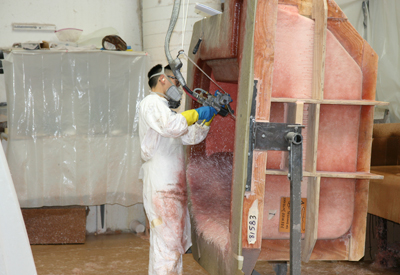 Employee exposure is now regulated by an Occupational Safety and Health Administration (OSHA) workplace airborne threshold limit value (TLV) of 50 parts per million (ppm) in many states including Minnesota. Releases to air are regulated by the Clean Air Act (CAA) National Emission Standards for Hazardous Air Pollutants (NESHAP) for reinforced plastic composites and boat manufacturing. Neither of these standards can be met cost-effectively without implementing pollution prevention methods and technologies that reduce styrene emissions.
Styrene reduction strategies rely on minimizing resin contact with air and can be achieved in a number of different ways. In open molding situations, maximizing the transfer of resin into the mold through operator training and improved resin application techniques is preferable. Additionally, switching to low-styrene emission resins is an important step to take.
SPECIAL PROJECT: Reducing Emissions from FRP Shops
MnTAP is partnering with the Minnesota Pollution Control Agency (MPCA) on an effort to help Minnesota’s fiber-reinforced plastics (FRP) industry reduce styrene emissions. As you may be aware, styrene was recently listed as a chemical of high concern by the Minnesota Department of Health. MnTAP believes that eliminating styrene has environmental and occupational benefits and can lower energy costs, potentially reduce part weight, and reduce reporting requirements and fees. Learn more about the project and how you can participate by clicking here.
Resources for Reducing FRP Emissions from Open Molding
- ACMA Resource: The American Composites Manufacturers Association (ACMA) produced a comprehensive body of information on emissions from open molding, including technical support guides and information on emissions factors.
- MnTAP Fact Sheet: Reducing Volatile Emissions in the Fiber Reinforced Plastics Industry. (2009). This fact sheet discusses opportunities for reducing emissions from FRP shops. See the sections on low-styrene emission resins, upgrading resin and gelcoat application equipment, controlled spraying and raw material monitoring.
MnTAP Industry Case Studies
- Case Study: Controlled Spraying and Laser Touch in the Fiber Reinforced Plastics Industry. (2007) Controlled spraying significantly reduces styrene emissions from open mold fiber reinforced application processes, benefiting employee health, the manufacturing operation and the natural environment by increasing materials transfer efficiency.
- Case Study: Fiberglas Fabricators Upgrades Open Mold Processing Equipment. (2007). This FRP shop adopted nonatomized equipment to replace spray equipment in open mold process and added raw material monitoring equipment. Styrene emissions were reduced by 50,400 pounds annually, meeting the NESHAP requirements.
- Case Study: Fiber Reinforced Plastics Shop Complies with New Air Permit Regulations. (2007) Sunrise Fiberglass Company replaced spray equipment with nonatomized equipment in open mold process. Low styrene resin replaced traditional resin. The company reduced its styrene emissions by 43%, meeting the requirements of its new air permit without lost production time or excess capital costs.
- Intern Summary: Source Reduction and Recycling Opportunities for a Fiberglass Reinforced Plastics Shop. (1995) Astoria Industries employs approximately 45 people and manufactures FRP components for truck utility bodies and livestock trailers. The manufacturing process uses an open-mold, spray lay-up process, which involves applying a fiberglass and catalyzed polyester resin mixture onto open molds.